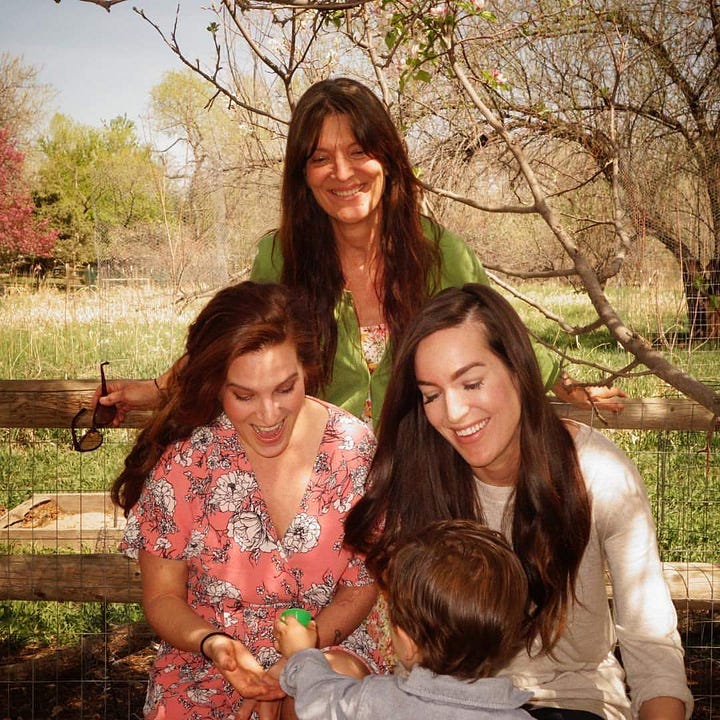
solid and sustained

Foxhole Revelation

3:03 PM


I spend a little bit of time reflecting on the past, and not necessarily intentionally; I may not want to deliberately turn a specific page in my personal history, but there it is...turning itself. 

Seven years ago, I wrote "Foxhole Revelation" as I reflected on the aftershocks, the little earthquakes, rattling from within my immediate family due to some of the more tumultuous elements in our history. Not to offend anyone who has literally survived his or her real foxhole experience due to war or violent crime, my immediate family has referred to each other as "foxhole buddies." The term reflects the bond we built after walking through our collective history, especially the tough parts.


Foxhole Revelation

So… here we are,
knee-deep in the muck of our history,
fingernails encrusted with the same dusty memories,
and bodies trapped behind embattlements, a tired triage
of blood and bandages,
of immature love and misplaced loyalty.

Here we stand in the wake,
the wearying devastation and disappointment,
our eyes filled with tears, and still we see
from the maze of disoriented guilt,
of grief and responsibility,
the carnage of our youth.

Our children,
sharing our tears 
through eyes widened and wise,
from the broader perspective gasp 
with embittered revelation, epiphany, 
and distraught resolve, to see
when the violating dust settles 
that the inhabitants of the foxhole
are both friend and enemy,
family and foe.


Sometimes, it seems almost impossible to sort through the "muck of our history," to wander with any sense of direction through the "maze of disoriented guilt...grief and responsibility." I am well-aquainted with my own need to connect the dots, to make sense of how the past, present and future are woven together. Compelled to make meaning, especially as it pertains to pain, loss and suffering, I notice that just because I need it doesn't necessarily mean that I have the skill or perspective to envision a higher purpose, or a greater good. Or even a way through.

People get wounded, and human beings, our memories and our nervous system fully trained by our traumatic or even abusive histories, pass along the energies stored in our reserves through our behaviors, our emotional presence, and even through snips in our DNA. It is comforting to know that we can also heal, and pass along the gifts that become available to us as we continue on that road.


For the record, I haven't fully retired from the occupation of negotiating anxiety and sometimes, depression; I sometimes feel like my feet are planted firmly on the boundary line between darkness and light. 


I know I am not alone. 


This does not mean that I am always suffering, or walking through my days in some kind of torment; it means I get a lot of opportunities to choose.


When I learned to ride a motorcycle, I was taught by a veteran rider to turn my head and look where I want the bike to go. It feels counterintuitive, dangerous even, to take my eyes off of the present course, but it is necessary to shift my gaze and press down on the handlebars, usually in a direction that feels...wrong. That is what brings about a shift in the trajectory. Trying to retrain the brain after years or even decades under the influence of toxic stress requires similar counter-intuitive actions, and reactions.


I am not ready (or inclined) to share the events leading to the "tired triage of blood and bandages" I describe in the poem, even though those experiences and, more importantly, the elements of healing that follow them, inform most of the writing on this blog. I'm not convinced it would be that helpful, and I don't want the "dark night of the soul" in my past to envelope my present and future.


Nevertheless, scar tissue is sensitive, reminding my connective tissue and nervous system pathways that something happened here, something big, something that informs my cellular memory and influences the way I interpret sensory input. 


When the "violating dust" unexpectedly becomes unsettled, it's dizzying. I look at it like the flip of a switch, one that seems to pull me through a portal. Although I may be sitting at home, safe and sound, I can be suddenly aware of some familiar sensations of panic, like I'm being pulled under water and there's nothing to hold onto.  


I found an educational psychology focused article by author Michael McNight that differentiates between a healthy nervous system and one that has been challenged by multiple touchdowns on the fight-or-flight pathway. Although the article focuses on children of trauma, and the way to support them, I was mostly interested in the descrition of these aftershocks of toxic stress.


"In the face of interpersonal/environmental trauma, all the systems of the social brain become shaped for offensive and defensive purposes. A child growing up surrounded by trauma and unpredictability will only be able to develop neural systems and functional capabilities that reflect this disorganisation." In a concise chart offered for reference, McNight focuses on what happens to a nervous system that houses "un-discharged toxic stress," referring to both ends of the response-to-trauma spectrum as being either "Stuck ON" or "Stuck OFF," like a switch that has been fused due to an unmanageable or damaging power surge.


Symptoms of being stuck on may include "anxiety, panic, hyperactivity, exaggerated startle, inability to relax, restlessness, hypervigilence, digestive problems, emotional flooding, chronic pain, sleeplessness, hostility and rage." If your switch is off, you may experience, "depression, flat affect, lethargy, deadness, exhaustion, chronic fatigue, disorientations, disconnection, dissassociation, complex syndromes, pain, low blood pressure, or poor digestion." 


Two things stand out here:


First, no one escapes toxic stress entirely, so many of these symptoms come in and out of our experience as humans, whoever we are.

It is also obvious looking at this list that if we are existing within either one of these extremes on an frequent basis, it is clearly unsustainable. Healing is necessary, and absolutely available, but it's going to take some time, and some counter-intuitive redirecting of un-discharged toxic stress.


Personally, I have gotten a lot of help: biofeedback, therapy, meditation and prayer, love and support from my friends and family, and surprisingly, acts of service. Someone told me once (slightly facetiously) that the mind can be a dangerous place - don't go in there all alone. While I am convinced that I have begun the helpful process of turning my mind into an ally, I haven't found anything more powerful than serving a community in need to get me out of my negative thought patterns.

Sometimes, I prefer to settle on a great movie and gluten free cupcakes. Very helpful.


Admittedly, there are certainly moments when there's there's nothing more healing to do than sit with the upheaval that an emotionally-charged memory serves up, waiting for the dark clouds to pass over, or even through me. Acceptance, surrender and trust may not completely erase painful memories, but they do "make me lie down in green pastures...lead me beside the still waters...and restore my soul." (Psalm 23) 


Walking near my home in Colorado a few days ago, I walked by a tree that was stunning, both in its artistry and in its twisted position. It stands, completely swayed, with branches and limbs reaching out so far and so bent that part of the tree lies submissively on the tall grass beneath it. It's as if it is doubled over, in a yoga pose, or maybe just resting, as if at some point, it meant to permanently fail, but was instead held, supported, by the ground beneath it. It seemed familiar to me, like a foxhole buddy, reminding me that I, too, have been shaped somewhat by my environment. But my core, my center, is both solid and sustained.


We lean into the embittered revelations, setting our attention where we want to go. We reach out to the others we know who can offer tools and comfort. Sometimes, in the most beautiful way, we are simply held up by the ground beneath us. 


                                               Copyright © 2019 Laury Boone Browning


"Adversity and thriving-working with children at risk," Michael McNight, LinkedIn, June 4 2017,  "https://www.linkedin.com/pulse/adversity-thriving-working-children-at-risk-michael-mcknight


relationships

Deep Love

3:02 PM


Deep love. It’s the stuff of movies, popular music and poetry. We wait for it, jump into it prematurely, we fight hard for it, we read self-help books about it, and we grieve it’s losses.

The magnetic draw of attraction can be confusing, throwing us off course on our quest for love, but usually we recognize the real thing when we encounter it.

Deep, deep love is undeniable.

The first time I bonded with my newborn grandson, Finn, he was in the hospital, the NICU to be specific. Born a month early with a disastrous platelet count, this little man needed to be infused and incubated for a week until he was stable enough to go home. There would still be some challenges.

Although I watched him enter the world, grateful to be invited by my daughter Rachael to be present at his birth, the first time I had an honest-to-God opportunity to bond with Finn, he had three needles screwed into his sweet, soft head.

Watchdog NICU nurses, our heroes, were urgently attending to his care while limiting the amount of time we could hang out with him in this space. Manage the variables until the threat is contained.

I couldn’t wait to get my hands on him, this little warrior who had barely learned to breathe oxygen outside of the womb. The first day he was in the NICU, while they were scrambling to decide whether he had an autoimmune crisis in his own body, or whether he was having a reaction to the environment in his mom’s womb (it was the latter), I was gifted a few precious moments to rock him in my arms while tests were being run in the lab, and while Mama and Papa were talking to doctors.

While we waited, we talked, he and I.

I may have been the only one using words, but I’m pretty sure we were both communicating. It’s as if the conversation had picked up somewhere in the middle, like we had already established the exposition of Finn’s story, and the inciting incident; and now that we stood facing the terrifying climax, secretly we both understood that the resolution had already been written. It would be okay.

I commended him for being willing to enter the world engaging instantly in this little hero’s journey.

He quietly pondered that for a while.

I reminded him that he was up to the challenge, in case he had already forgotten, but he seemed to understand; this was all part of his storyboard, the scaffolding for his his future, his imprint on the world. I knew he was special…already.

It was in his eyes. His little bald baby head was a perfect match for the look in his eyes, the look of an ancient wise man. I remember referring to him as Yoda, not so much because of the funny shape of his head but because of the light that seem to live behind those eyes. He looked like he already had amassed the wisdom of a 60 or 70 year old man, at only two days old.

He’s been my main man for three years now, and I’ve hoarded this delightful honor of being his daytime caregiver while Mama and Papa go to work as teachers everyday.

I’ve also learned more about deep love.

Notwithstanding our now-three-year-old Finn’s perfection overall…his razor sharp intellect, verbosity, sensitivity, high EQ and his undeniable dance skills (See my moves, Lala)… these are not the reasons I love him.

That-I-love-him may be the reason, however, that I see him.

Deep love isn’t the stuff of romance, chemistry, or happenstance; it’s the result of painstaking, committed investment. We pour love into our children and grandchildren, and it grows.

They break stuff or pee on it, flush valuables down the toilet, tell us to go away, insist vehemently on one-more-minute-of-whatever. They demand our relentless, devoted attention, give us three million reasons to worry about them, and throw unreasonable prompts at us to elicit the construction of improvisational storytelling that wears out every molecule of intellectual energy.

So where does this kind of deep love have its origin?

I’m not going to pretend I know the answer, but I have a theory.

It may come from holding someone’s tiny hand while he struggles to catch his breath.

It may come from cleaning up messes without being grouchy, rocking him lovingly and fearlessly when he has a desperately high fever.

Deep love may show up unexpectedly when he tells you a joke, and you laugh loudly and authentically.

It’s nurtured in an environment of consistency, of showing up, of listening when you’re tired, of coming when you’re called, of saying no when you know it will disappoint and forever diminish your superhero glow.

The thing about deep love, true love, is that it can be trusted, not because it’s magical but because it isn’t. It’s just investment, empathy, and commitment to see, really see, the person sitting in front of you.

And enjoy him.

                                            Copyright © 2019 Laury Boone Browning
                                                              

acceptance and radical self-love

The Finish Line Is Now

2:20 PM

Photo by Guillaume Bolduc on Unsplash
So, I've been noticing that when I'm on my walk in the morning and I'm headed towards home, the closer I get to my house, the more I pick up my pace. Like a horse, trotting toward the barn.

Why this instinct to cross an imaginary finish line?

I was thinking about this last weekend to when Pastor Peggy decided to take us all out to the backyard labyrinth for a little collective walking meditation. I've never been on a labyrinth, so it was mesmerizing. It was also unique in that everyone present at the church service was also walking the labyrinth at the same time providing a range of experiences
.
When this quiet and reflective exercise was over, and we had gone back inside, Peggy asked us what we observed or learned while we were walking. Naturally, everyone had a unique experience.

Of course, I was swimming in a deep pool of thoughts upon which I might to ruminate, but eventually, I settled on sharing these two things.

First, during my walk, I was acutely aware of the interplay between solitude and community.

I wanted to enter my own experience, to focus on breath and connect internally. But surrounded by all these others, I also wanted to interact, embrace, guide and encourage. After feeling conflicted at first, I gradually accepted the oscillation that seemed to happen naturally between the two. Sort of like it tends to happen in life, perhaps less consciously.

The other awareness centered around what I would call an occasional glance toward the finish fine, which in this case, is the center of the labyrinth.

Of course, this is ludicrous with a labyrinth as the whole point is to be on the path, not to "finish," or to get somewhere first. I learned while I was still in my teens that my name is rooted to the Laurel wreath, the garland put on the Victor's Crown after winning an important race. Laury, then, by all accounts, is a reflection of the word victorious.

Laury…the Finisher.

The running of my personal race has always been peppered with a painful sense of loss over terrible mistakes I've made in the past, decisions I made without the tools to choose wisely.
Struggling for a lifetime around codependency, attachments, fear and lack of trust in myself led me to a giant pile of regrets, regrets that tend to make me feel like I have to make up for lost time or redeem the losses somehow. Surely all of this pain isn't for nothing?

Of course, it isn't.

Like an obstacle course, the challenges we face and the decisions we make lead to a destination of our creation.

Although I wish I could have done my obstacle course without hurting anyone else, and without causing myself pain and suffering, when I look at where I've landed at the end of it all, I know I need to make peace with it, choosing gratitude in the present as a guide.

Continuing to suffer for past lapses in judgement will only perpetuate more suffering; it also drives our focus backwards into regret and guilt, or forward into worry or fixing.

I don't know whether I'm "winning" my race, exactly. I do have this feeling though, a feeling that's rich with compassion and joy, that the finish line isn't out there somewhere. It's here, under my feet, right where I stand.

This is where my experiences are coming into focus, and where decisions are being made in the moment, the ones that create my story.

And if the finish line is now, then I guess I've made it. Well done.


                                            Copyright © 2018 Laury Boone Browning
                                                               

no fear

In Time

3:22 PM

OK, I'm carrying the twins here, but you can see I am not a petite pregnant woman!

Pregnancy is intoxicating, infused with hazy dreamlike visions of the future. I had no idea what to expect, and if I allowed myself to really go there, I knew I didn’t have any idea what I was doing.
But at least, my expectant friend Deberah, an amazing mother, made it look like Xanadu. Nirvana. While she copped to the difficulties and hardships pregnancy imposed on the female frame, and laughingly admitted to the challenges of working through finding agreement with her husband on basic child-rearing values, essentially, she made it look easy. I was elated I finally had a personal “project,” and I enlisted my mother to help me prepare the nursery while Harry and I enjoyed the process of registering for gifts, and thinking about labor and delivery.
I think he enjoyed this more than I did. At least, he had more of a sense of how he hoped it would all go. When he decided he wanted us to take a look at midwives and home birth, I did what I always do. I jumped on a raft and rode the current. I thought, why not? I have no experience with hospital birth or home birth, so I was open.
I can see it on my headstone right now. Here lies Laury Boone Browning. Awesome at going-with-the-flow.
I was happy pregnant, and blissfully uninformed about what to expect from labor and delivery. Sure, I read all of the articles about home birth, about how “labor is more about focused work, and not pain,” but until you pushed an eight pound person through an opening that has never accommodated anything of that sort, you just don’t know what you don’t know. We watched videos, too. They also made it look pretty doable: take a class, get a crib, practice breathing. I had this general idea that if my mother could have four babies, and my sisters had had a bunch of them, why couldn’t I handle it? I did what I’d always done…I put a smile on my face and faked it.
Harry and I did our homework and located the perfect midwife. Her name was Joan Dolan, and she was a pistol. We liked to refer to her as a drill sergeant, and she was certainly the perfect person to depend on in a crisis. She came off a bit…harsh…but for some reason, we trusted her absolutely.
A big woman with wild black hair and an assertive-yet-calming tone, Joan was our rock; we felt safe in her presence and followed her lead about everything as we prepared to give birth to our first child right there at our home in North Hollywood. I was huge, and as is typical of new mothers, had started to build some anxiety around how this giant mass in my belly was going to find its way out into the wide world without tearing me in two. This anxiety would lay the groundwork for a longer labor than anyone expected.
Although I can’t honestly remember my due date, I do remember that I was pretty much on schedule when the contractions started July 2nd, 1984, almost 4 years after our wedding. We had everything ready, so we called Joan, covered our bed in plastic, laid out the materials she had requested, and I called my mom and sister Debby who had planned on being present at the birth. I had also included my friend Deberah who had just become a mother and was a comforting addition to the entourage. Unfortunately, it would be a couple of days before anyone would get to wrap their arms around a baby.
The theme of the next two days: all of my contractions, so painful and just a few minutes apart, we’re producing nothing but panic. Although my body seemed to be holding it together, and the baby was showing no signs of distress, after a whole day of terrible labor, my cervix had barely opened at all. Joan wasn’t camped out at my house, which in retrospect was a little depressing and isolating. I felt like I hadn’t studied for the test.
She would come from time to time, and was certainly available, but there just wasn’t much happening, so she visited intermittently, reaching her hand deeply into my body to measure my progress. Each time, I felt invaded and tense, afraid there would be bad news, and afraid for this process to stagnate, or for that matter, to move forward. After the first full day of labor, there wasn’t any progress, leading to a palpable rise in the shared group tension; I was feeling more guilt and dread than anything else.
During the second day of labor we tried a few things. I spent a lot of time soaking in a bath, trying to relax and do the “reverse Kegel exercises” Joan had trained me to do. We walked around a little bit together, Harry and I, and more than once, we considered the option of going to the hospital to get me some drugs, and get the baby out one way or the other. Our drill sergeant, Joan, seem to have some brewing concern although she was also willing to let this ride a while longer. I was trained to stop and squat through the contractions, but once I realized how much it hurt, there seemed to be a sort of visceral resistance, a deep, inward rebellion going on in my body. If pelvic muscles could talk, they would have been saying something like, Hell, no! But, I kept my game face on, and tried to look compliant.
On the morning of July 4th, in an atmosphere of anxious despair, Joan showed up to examine me; there had still been minimal progress. That’s when she marched in and gave me a lecture neither Harry or I will ever forget.
“Do you want to have this baby at home, or at the hospital?”
I was indignant. Hurt. Terrified. Honestly, I was kind of hoping it wouldn’t hurt so much. My midwife was kind but firm; it was decision time. Although Michael seemed to be fine after two days of constant, unproductive labor, I needed to have this baby, one way or the other.
“Do you want to have this baby…?” Truthfully…? I wasn’t sure I did.
It was like this militant version of Joan was speaking another language, and I dug deeply into my awareness to try to decode the message. Is this my fault? Am I slowing things down? Could the pain and fear be inhibiting my ability to open up and let this happen?
Then, for brief moment, I understood. I knew that where there should be opening, there was tightening. And where there could have been squatting and movement, there was panic, rigidity.
I needed to shift, and I needed to do it quickly. I need it to help my son move through this moment, to quit trying to protect myself from pain, but embrace it. Welcome it to welcome him.
Right at that moment, I got off of my bed, and turned around to grab onto the bed spread while I reversed my state of resistance, and squatted, a move that was one part physically practical, one part spiritually strategic. Acceptance. My focus moved from protecting myself from the blinding, disorienting pain to helping my son make his journey to life and breath, a journey he couldn’t make without me.
It was almost as if I could suddenly see, with x-ray vision, the process that was going on between my rib cage and cervix, a video running through my brain of the muscles above the cervix pulling, straining upwards, like a garage door that is hoisted open by pulling upward on strong chains whose job it is to open and close on command. My heart was the mechanism, the motor, as the rest of my body offered itself in support. I could picture myself not just allowing this opening, but willing it, noticing the present suffering while fixated on the necessity of it. It simply wasn’t about me anymore. It was about the baby.Thankful for the light that showed up in the nick of time, I was able to surrender to this moment, and all of the stretching and tearing that came with it.
A change in course came quickly. After observing and almost immediate shift in terms of dilation of the cervix, Joan broke my water and we quickly moved through transition. I was ready.
Michael Taylor Browning was born on July 4th, healthy and in possession of all of his parts. Harry and I considered it one of the most important moments in our lives when we learned that what we choose to focus on sets the trajectory for the journey.
A lesson that I would neglect to integrate into the tough challenges that were still to come..until later.
                                            Copyright © 2018 Laury Boone Browning
                                                               

acceptance and radical self-love

Mothering

8:17 PM


If you bungle raising your children, I don’t think whatever else you do well matters very much. -Jacqueline Kennedy Onassis

I mean, is it me, or is this a really harsh overview, considering that mothers are all pretty much…imperfect? OK, maybe I’m being defensive, but…nothing else I do matters anymore? Not “very much?” Can we at least define the word, “bungle?”

On Mother’s Day, we can’t help but reflect on our own perceptions of our histories, our experiences with our own mothers, and our experience of being mothers. For some of us, this reflection represents a labyrinth of emotions, either difficult or satisfying. Mostly both.

As for me and my mom? 

My mama, Shirley Lee Foley Boone, passed on January 11, 2019. But in reflection, it’s clear to me that my issues with her had for the most part resolved themselves, leaving behind a forgiving, nurturing, tender mother-daughter relationship we enjoyed in her later years.

There are a few reasons for this recovery. For one thing, even though this epiphany has taken a few decades, it’s become clear to me as an adult that my mom loved me and did her very best to shelter me, giving me the life she had only dreamed of as a child. Equally impactfully, my own inability to protect my children from spending their formative years in a chaotic, dysfunctional environment has created space for the compassion I’ve needed to be able to understand how hard it is to parent before accumulating the tools we need in order to parent ourselves.

Parenting, or even just adulting, is challenging.

Adapting and Bouncing Back

I’ve spent a little bit of time in therapy recovering from, well, a lot. Recently, my no-nonsense therapist recommended the book, Bouncing Back: Rewiring Your Brain for Maximum Resilience and Well-Being, by Linda Graham, MFT; I’ve been devouring it for the last few days.
Amazon offers the following blurb for anyone interested in purchasing the book:

"Resilience is the ability to face and handle life’s challenges, whether everyday disappointments or extraordinary disasters. While resilience is innate in the brain, over time we learn unhelpful patterns, which then become fixed in our neural circuitry. But science is now revealing that what previously seemed hardwired can be rewired, and Bouncing Back shows us how."

The book offers strategies for forward motion after facing traumatic events, laying out a breadcrumb trail directly to our wiser selves…perhaps, a shortcut that can take us slightly further than our therapists are able.

Therapist and author Graham establishes in her first chapter that “interactions with others — such as experiencing empathetic, responsive, parenting — instill a sense of safety and trust, a sense of importance and being loved, and a sense of mastery that become your brain’s first templates of resilience and serve as lifelong buffers from stress and trauma.” (27)

But what if these interactions are unstable?

Resilience Gone Awry

The author moves on to describe the ways that our pathways for learning resilience can go awry, offering the following early childhood scenarios.

Insecure-Avoidant attachment can lead to coping that is stable but not always flexible.

Insecure-Anxious attachment leads to coping that is flexible but not always stable. Finally, 

Disorganized attachment leads to coping that is neither stable nor flexible.

I’ll go ahead and admit I may be the uneasy product of Insecure-Anxious attachment…flexible, yes, but definitely not always stable.

This form of an attachment malfunction happens when a parent is “consistently inconsistent, sometimes attentive and loving, and at other times harsh or punitive, sometimes over-involved and at other times in their own world…”

The author summarizes, “adults who never felt secure with a parent or sure of themselves are painfully subject to abandonment fears and can be hyper-vigilant about loss of connection. The capacity for resilience can be too easily derailed to become passivity, and anxious preoccupation of what others think of them, or a sense of victimhood.”(32)

So, now for the good news.

The study of the brain’s neuroplasticity has made it clear that “we can learn to bounce back better by consciously rewiring our brains' learned patterns of coping.” (xxvii) Current theories on neuroplasticity tell us we can use new experiences and strategies to rewire old patterns.
Graham explains that disciplined practices of mindfulness and empathy, or mindful empathy, “is the single most important tool for strengthening the functioning of the prefrontal cortex.” (51)

The Story

Before I get around (finally) to the purpose of this post, this may be a good time to mention that while my mother may have been the conduit through which an insecure-anxious attachment disorder might have found a home in me, I’m convinced that, even though her childhood was more tumultuous and challenging than my own, she did a much better job than I building stability and consistency while raising her children.
Nevertheless, I always knew something was missing in the bond between my mother and I while I was little. Truthfully, I was pretty convinced she didn’t like me, but my limited decoding skills may have been lacking the tools to interpret some subtle cues.

In my thirties, while raising my very young children in a home that was extremely dysfunctional, I had begun to wrestle with my own inadequacies. Once, when I reached out to my mother to look for support, to sort out the disorder and dysfunction that was threatening my family, she offered some insight.

Sitting in a dingy airport motel all alone, lamenting the terrible disturbances that were beginning to erupt on a regular basis at my home in Texas, I reached out to my mother for comfort, and the scene is still touching to remember. In an attempt to offer me some relief, absolution of sorts for my own inadequacies, my mother generously told the truth about her emotional state during the months that she carried me, even continuing into my early childhood. She told me about my father’s business, and about the amount of professional hours he spent with beautiful young ingenues, women who enjoyed pre-childbirth figures and carefree lives. She was insecure and filled with anxiety.

After giving birth to three children in under three years, she had decided she would try to be her best self, whipping her body into pre-pregnancy shape. My very young parents were struggling to build their lasting relationship in an ocean of challenges, and about the time my mother was starting to feel beautiful again, she found out she was pregnant with me, her fourth.

In that Motel 6, crying on the bed, I listened to my sweet mother tearfully tell me how devastated she was to face another pregnancy. Although she had never considered abortion, she shockingly admitted that, at times, she had she had allowed herself the weak comfort of hoping that the pregnancy would end early, naturally.

Decades later, in this moment of intimacy, she tentatively and gently wondered out loud, had the nature of my point of entry, and the negative emotional climate, impacted the way I felt about myself, and the way I approached challenges in my own relationships?

She continued to share with me her own lack of resilience in facing the demands I placed on her as a (fourth!) baby and toddler, and the way my energy and temperament exhausted her more than the other girls ever had. She was exasperated, frustrated, and agitated.


It was a beautiful, honest conversation in which my mother expressed her fallibility in those early years, but emphasized her deep, deep love and affection for me as I grew, as well as her affinity for me as an adult daughter. She ask my forgiveness, and offered up this piece to the puzzle that I now reflect on as I read about the way resilience and “bouncing back” is tied to attachment issues.

My mother gave all she had, investing in her household and her children in every way she could at the time, growing over the years to deepen our relationship and to build honesty and intimacy.

Nevertheless, subtle messaging in the early years is programming, binary systematic programming that sets certain ways of operating in motion. Flexible, not stable.

If my mother could have, in her wildest dreams, gone back and done things differently, wouldn’t she have? I know I would love a do over with my kids' early years, but I’m afraid that isn’t on the menu for today.

Uncoiling the Twisted Knot

So, what to do?

Let’s get back to this idea of mindful empathy.

If disturbances in early childhood create coping strategies that may eventually lead to emotional fatigue and lack of resilience, then it stands to reason that healthy emotional relationships in the present have the potential to grease the twisted knot of unsustainable thinking and practices. It’s a process, but I’m coming to understand that the way we do relationships right now can rewrite the programming, or at least, offer specific adaptations, creating a different overall experience going forward.

My day job has been the surprising catalyst for this forward motion in my own life. Most days, I am a full-time caregiver for one of my grandchildren, a gift that is impossible to quantify. One of the benefits is hanging out with moms.

The children are small, so we aren’t caught up yet in the ritual of school and sports activities that come with parenting. Right now, it’s about parks, story times at the library, museums and craft activities, many of which are shared as we frequent the same places.

We seek companionship for our children, and secretly for ourselves, as we attempt to build community during the potentially isolated years of early child care. Why go to the Discovery Museum alone when we can do it with friends?

“The roots of resilience are to be found in the felt sense of existing in the heart and mind of an empathetic, attuned, self-possessed other.” 
Diana Fosha

I had no idea when I embarked on this journey with my grandson that my connection with these women and their children would offer a nurturing environment in which I can observe empathy in action, rediscovering “…the urgent need of the human mind to re-envision ourselves in the world, and the boundless depths of the human heart and soul to care.”

I’m so grateful for mindfulness practices, morning meditation and breathing throughout the day; my fledgling work in this arena has offered me just-enough-space in my trauma-injected brain to observe, to really give attention to, the gifts these women bring to the community table. I find myself noticing all the time how these women instinctively use the elements of empathy, not only in the way they relate to their children, but to themselves and each other.

I wanted to take a minute to reflect on, and honor, the way they teach me.

Mothering

According to Graham, “five elements of empathy are essential for maturing the prefrontal cortex in the first place, and we’re continuing to strengthen it throughout our lives.”

Resonance: picking up the “vibe” of other people

Attunement: feeling your way into another person’s experience and “feeling felt” by them

Empathy: making sense of your experience or another’s, conveying a shared understanding of the meaning of the experience, and sensing that any experience is completely understood and accepted

Compassion: literally “feeling with,” keeping the heart open and caring in the face of struggling or suffering

Acceptance: coming to terms with what is or has been so that you can cope going forward (p. 69)

While my days are filled with play, laughter, and the sharing of caregiving tools that are natural in this environment, these days are also filled with aha moments, moments of enlightenment, in which I find myself pausing to take in, and remember, some beautiful elements of empathy, in action.

Mia, a single mom, finds comfort praying for others in an organized prayer room that focus on healing. She seeks out, actively, ways that she can support people around her in tangible ways, offering caregiving, food, or even babysitting. And she paints. When my daughter was suffering with an illness that brought about an emergency visit to the hospital, Mia took the time to tune in to my daughter’s experience, drawing and painting a prayer for her by way of a specific image for my daughter to re-image herself filled with grace and courage.

Mia was modeling resonance, the gift of tuning in to build connection and empathy.

While resonance is more vibrational, acting outside our normal patterns of conscious processing, attunement reads emotions of others “mostly through nonverbal signs of facial expressions, body language, and tone of voice.” (p. 72)

Teaching attunement in practice, I’ve watched my beautiful friend Kelly again and again as she trains her children in the art of empathy.
“Katie, look at Sam’s face. What do you think he’s feeling?  What do you think could make him feel better?”

Children over the years have been forced to build their own paradigms, constructing what they know from what we do. Kelly regularly and consistently goes the extra mile, not just practicing attunement on her own, but teaching this awareness to the little ones around her so that they are not left to wonder how to build empathy in their interactions. Life around Kelly is like a workshop; we learn by demonstration in practice.

Attunement is one part of the larger umbrella of Empathy, and of course, empathy “…works to move beyond noticing and naming emotional experience to generating a cognitive understanding of that experience: to be aware of why somebody… might be feeling the way they do.” (P. 74)

Andie is a beautiful listener, an important skill in the art of empathy. She expresses her listening through art, painting portraits for friends and clients with a well-articulated sense of what lives behind their eyes, attempting to convey the spirit and soul as much as features and tone.
She paints late at night because she has two small daughters; I’ve tried to imagine how she maintains that energy, focus and sensitivity after pouring herself into her children and home, but it seems to be an expression of love and spiritual connection. Of course, the work she does is restorative.

I’ve watched as she consistently and actively empathizes with her daughter, through tantrums and miniature heartaches, allowing space for feelings that other parents would simply attempt to extinguish.
Sitting with me at an outdoor garden while the children run and play, she has teared up listening to me share my challenges, seeking to understand, a gift I will always be grateful for: empathy in action.

While empathy seeks to understand our responses and the responses of others, compassion holds space for, according to Graham, “feeling with” the other.

Sara, my first born twin, wears a tattoo on her arm of a line from a Shawn Colvin song that says, “if you need someone to walk with in the dark, I’m your man.” Not an advertisement to the wide wide world, the quote is meant as a shout out to me, her mother, both as an offering of support and an acknowledgement of the kind of compassion that I’ve been able to recognize and appreciate in her.

Sara was raised in an unsteady environment in her childhood home life, and although she no longer identifies as a child of trauma, she has accessed compassion for herself, and others, due to her at-times horrific experiences. She has done the work of finding healing and personal grounding, of stabilizing herself in an emotional storm, making it possible for her to offer a hand to someone else who may be faltering. This work has not been easy, but over the years, Sara has acquired an expansive emotional vocabulary; she is able to “feel with” others while maintaining her own groundedness, a delicate balance for anyone.
When I picture my own passing, it’s nurse practitioner Sara I see holding my hand.

Compassion makes room for acceptance, allowing us to come to terms with our experiences and learn from them. To grieve our losses, to create new pathways, and to hone new responses to future challenges.

Rachael, my youngest twin daughter who arrived twenty minutes behind Sara, has been doing the hard work of healing after harsh decades of carrying terrible burdens and scars from a painful childhood. The inequities of life dealt her many hard blows due to the carelessness, and even cruelty, of individuals who should have been tender caretakers.

Anyone in her position, carrying the weight of an unfair history, could easily rationalize living knee-deep in resentment, anger and entitlement. She has chosen the path of acceptance and healing, with all of its heavy lifting and infinite increments. She’s decided to break the cycle of pain that was her inheritance, and look ahead to healing her life, dreaming empathetically of providing opportunities for others to benefit from her process. And she’s chosen to focus her life on paving a path of loving protection and nurturing shelter for her young son. It’s hard to measure the cost of these choices, but she moves ahead, focused on healing and redemption, “coming to terms with what is or has been so that (she) can cope going forward.”

Perhaps, the presence of these women, and the gifts they bring, has gently helped position me in the present to be able, easily able, to have compassion for my mother, especially juxtaposed against the painful awareness of my own failures.

Coming full circle, I might be able to come to terms with my failure as a mother, my impotence in protecting my children from traumatic experiences. I trust that someday, possibly in the near future, I will be able to deeply and compassionately forgive myself, to acknowledge without blame or shame that I did not have the tools at the time to solve the Rubik’s Cube of my family’s dysfunctional dynamics.

We lay our judgment at the door, once and for all removing ourselves from blame and shame when finally we realize they no longer serve.
There are losses to be counted, but be there’s a reason that the art of mothering (and fathering) lies at the heart of our spiritual traditions.
Some talk of God as if he were a Father, and certainly, many acknowledge the mother heart of God as evidenced in nature...and our "Mother Earth."

Having become a part of my community of moms, I’m starting to believe that mothering is not only defined biologically. It’s spiritual.

In the same way the Earth exists within a constant state of regeneration, so are we as mothers. My mother evolved, not just as an individual engaging in growth and renewal, but through the eyes of her daughter as my perspective enlarges.

I have changed through the eyes of my daughters as their perspective shifts.

But the biggest surprise has been this awareness that mothering continues through my community of nurturing women, my family, and most surprisingly, myself.

I play a part in this divine practice of mothering myself. I have bungled being a mother. I have bungled being a daughter. I will probably continue to bungle some really important relationships.

But I respectfully disagree with Jackie Onassis. It isn’t over.
And everything I do from here matters.

Very much.

                                            Copyright © 2018 Laury Boone Browning


awareness

Switch: Turning On the Super-Power of “Noticing”

2:45 PM

Photo by Deva Darshan on Unsplash
Earlier today I was driving a winding side road, preparing to drop some food off at my daughter’s house. A middle school educator, she has been terribly ill, and is soldiering through end of her school year. I felt a little bit of urgency heading toward her home, typically running late, when I approached an intersection. Shit.
There was a woman crossing the street with a skateboard in her hand and earbuds in her ears.
I’ll admit to a passing moment of agitation as I anticipated that she would force me to slow down and stop without so much as an acknowledgement.
And then, a small thing happened.
She looked over at me, smiled and waved. The kind of wave that acknowledges appreciation. “Thanks for waiting” was my interpretation.
Something shifted in me. It was almost physical.
I watched her walk away, and I found myself smiling. Smiling. I had still been forced to slow down. I had still had to accelerate all over again. But just for a moment, I was able to almost quantify the effect of that little act of humility and gratitude.
She acknowledged me, and appreciated that I was making space for her.
Suddenly, we were a team.
Now, immediately after the incident, I’m transcribing this interaction, as small as it may seem. I’m wondering how many similar transactions happen on any given day in which someone does not acknowledge the other, in which one person is left feeling slighted, ignored, misunderstood?
At the same time, quantifying the cost of taking such a small step to consider someone else. Acknowledgment…humility…gratitude.
The cost of the investment is so small compared to the potential return, not just for me personally, but for my community.
For all of us.
What did it cost to acknowledge somebody crossing the street, needing to make a turn in the road, serving you food? And why don’t we do this all of the time for each other, as simple as it is?
“A person crossing a road near a painted stop sign” by Bethany Legg on Unsplash
Maybe, we’ve bought into this concept that what we accomplish in a day is more important than the people we pass on the street. Maybe we’re exhausted? Distracted? Maybe, we just have some bad habits, like trying to make up time when we could be paying attention.
I’m pretty convinced it’s just a matter of awareness . Focus. Practice.
You know what helps? Noticing.
Noticing when someone does it, a small act of generosity that creates a climate, an environment, for more acts of generosity.
Maybe noticing is a switch, and maybe we can choose to tune in to it.
I think I’m going to give it a try.
                                            Copyright © 2018 Laury Boone Browning
                                                               

compassion

Kicking the Cat

11:03 AM


Famed motivational speaker Zig Ziglar told the powerful story of an executive in a financial institution who, frustrated by the events of his day, takes his frustration out on his sales force, assistants, and secretary. The human fallout resembles one of those competitive domino videos on YouTube.

Each employee is bruised with harsh judgement, then turns around and doles it out in kind to subordinates, and down they all go, flailing and slinging their reactionary behaviors.

The story ends when the angry and hurt little boy of a mistreated employee, having no one else upon whom he can dump his resentment, cruelly kicks his cat.

Not my girl, but looks just like her


Between the ages of 7-17, my nanny, best buddy, body guard and entire posse was embodied in a gently imposing, jasmine-eyed German Shepherd named Heidi.

Proven by tolerating my bossy leadership style for years, the patience of that sweet girl amazes me still. My perception, looking back, classifies her as my dog, but I think that’s just the story I told myself back in the day through the hazy view of my possessive inner brat. She was the family pet, but she and I were close friends.

I didn’t manage relationships very well as a child, making assumptions that my vision for games and activities were to be followed without complaint, possibly a byproduct of being the youngest of four; I didn’t have a lot of control in the sibling pool, and would tend to over-assert myself with peers. When these expectations of control over others in my sphere of relationship didn’t pan out, I wandered the hood with Heidi, my best friend.

Aware of my premature shedding from the girl pack at our home on North Beverly Drive, Heidi knew I needed a close-runner with a gentle fetch. She stuck to me like glue, traveling the alleyways and gently sloping hills of our neighborhood, sometimes even willing to pull me behind her on roller skates. We laid ourselves out on the lawn, looking at rolling clouds, and sometimes, stick-macheted our way through the backyard jungle together, two peas in a pod.

She was the willing companion who listened to my performances and tirades, at times, my only friend when I was too dictatorial for the neighborhood kids who opted instead to pair off with Debby or Lindy, leaving me to play alone. Sometimes, I even threw the ball for her and took her on walks without ulterior motives, but in a world that taught me that I was at the low end of the totem pole, she was my bitch.

Although I may have only held omega status in the Boone girl pack on Beverly Drive, Heidi bore the brunt of my behavior as a self-decreed-alpha where she was concerned. I have a painful memory of yelling at her harshly, even swatting her, unfairly and without cause. I bullied her, ordered her around...a reactionary tendency. Kicking the cat.

It is tough to face this truth about myself, and harder yet to admit it to anyone else.

I wish I could make it up to her, but Heidi passed quietly at my childhood home a year after I started college, so I have chosen a pay-it-forward approach.

My memory of this strong, gentle Shepherd who absorbed my irritability without becoming hostile or unfriendly inspires my desire to be forever kind…to people and to animals, especially dogs, in my circle of influence. This sweet girl-dog, my old romping buddy, reminds me to stop and wonder about my agitation, to question it, and to seek to resolve it before giving it the power to do harm. To anyone or anything.

                                            Copyright © 2018 Laury Boone Browning


German Shepherd image courtesy of Wikipedia, https://en.wikipedia.org/wiki/German_Shepherd

Popular Posts

Like us on Facebook

Followers